Vantage 3.0
Introducing a hybrid approach to using Document AI and GenAI
Supercharge AI automation with the power of reliable, accurate OCR
Increase straight-through document processing with data-driven insights
Integrate reliable Document AI in your automation workflows with just a few lines of code
PROCESS UNDERSTANDING
PROCESS OPTIMIZATION
Purpose-built AI for limitless automation.
Kick-start your automation with pre-trained AI extraction models.
Meet our contributors, explore assets, and more.
BY INDUSTRY
BY BUSINESS PROCESS
BY TECHNOLOGY
Build
Integrate advanced text recognition capabilities into your applications and workflows via API.
AI-ready document data for context grounded GenAI output with RAG.
Explore purpose-built AI for Intelligent Automation.
Grow
Connect with peers and experienced OCR, IDP, and AI professionals.
A distinguished title awarded to developers who demonstrate exceptional expertise in ABBYY AI.
Explore
Insights
Implementation
ABBYY FineReader Engine
Overview
Features & Benefits

The ABBYY FineReader Engine software development kit uses AI OCR to allow software developers to create applications that extract textual information from paper documents, images or displays. This best-in-class AI OCR SDK provides your application with excellent text recognition, PDF conversion, and data capture functionalities, enabling it to convert scans into searchable PDF, Word or Excel documents, and access data on photos or screenshots.
Whether you are a software vendor, system integrator or an enterprise company developing your own IT systems, ABBYY OCR SDK will help you create highly accurate text and data processing applications.
Create desktop or server applications for Windows, Linux or Mac and deploy them in the Cloud or on Virtual Machines. The diverse AI OCR features can add value to applications within many areas, such as DMS, ERP, RPA, insurance, banking, healthcare, legal and machine vision. Available for Windows, Linux, Mac OS and embedded platforms.
On premises or in the cloud.
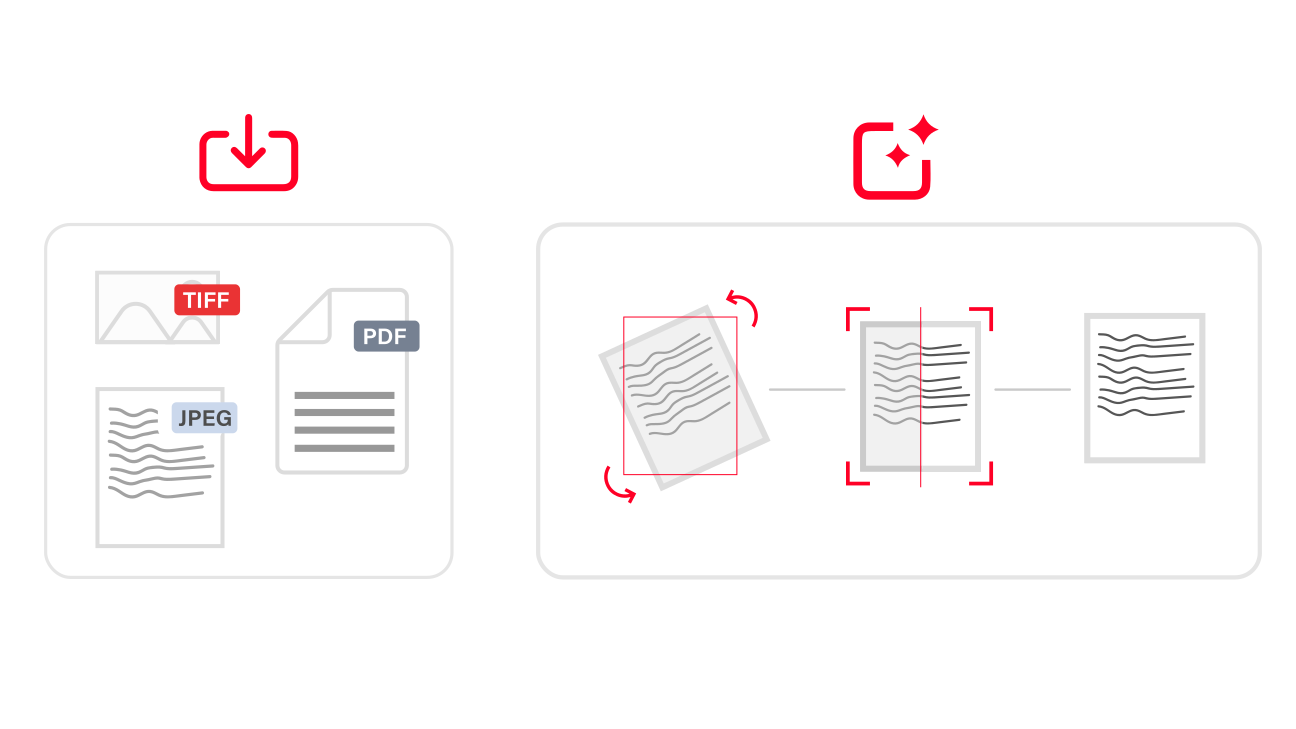
The OCR developer kit can receive input from many sources. Images saved as TIFFs, JPEGs, PDFs or other image formats as well as digitally created Office documents can be imported while photographed text or scanned paper documents can be processed directly from the memory. To increase recognition accuracy, the image quality is enhanced during the pre-processing step. The SDK applies a wide range of imaging functions such as image rotation, binarization, de-skewing and others to optimize the image quality.
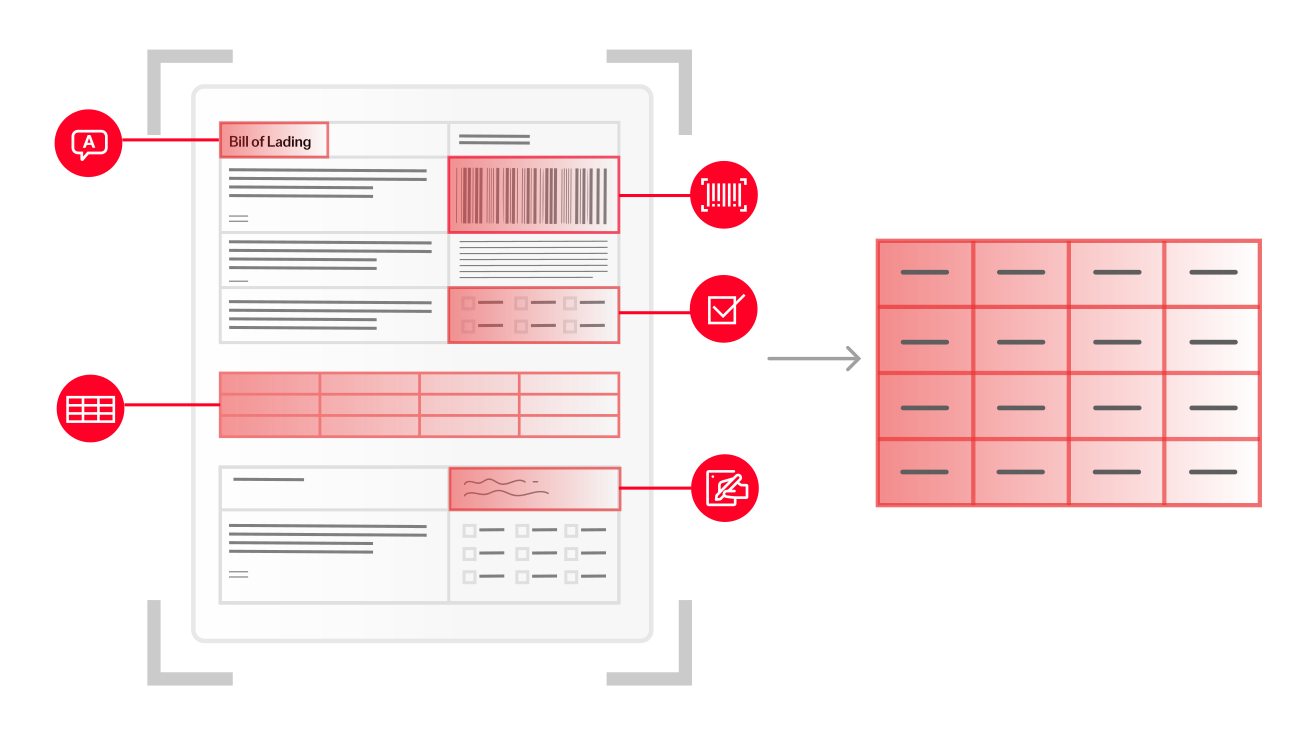
With AI-based algorithms and ABBYY Adaptive Document Recognition Technology (ADRT®), the OCR toolkit analyzes the layout of each individual page as well as structure of the document as a whole. This process defines the areas for text recognition and delivers information about layout and formatting elements for the final document reconstruction at the end of the OCR process. With the highest accuracy, ABBYY FineReader Engine SDK extracts multilingual machine-printed and hand-printed text (OCR, ICR) as well as various other information including, checkmarks (OMR) and barcodes (OBR). By creating their own dictionaries or recognition patterns, the developers can increase the recognition accuracy of specific languages, unusual characters or fonts
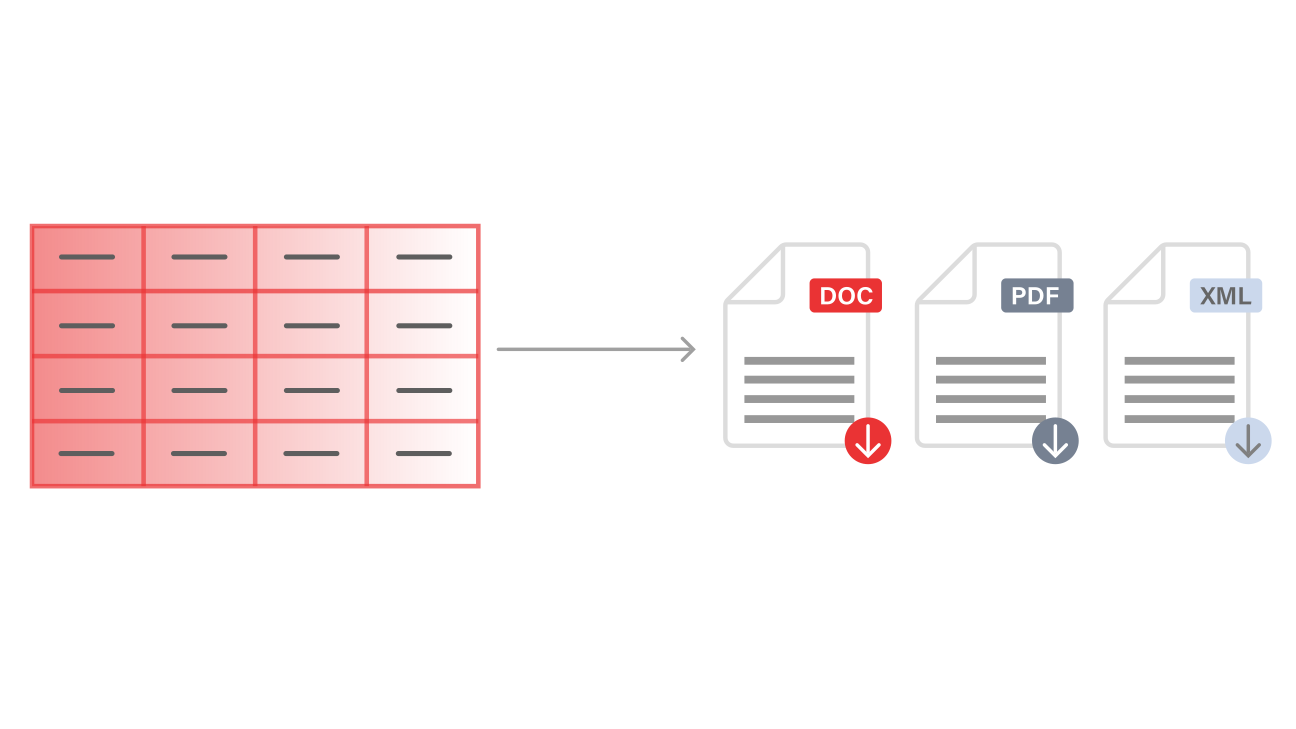
The OCR SDK offers many options for exporting recognition results and different levels of document layout reconstruction. Numerous storage formats are available: text, XML, different types of PDF and PDF/A formats, editable Microsoft® Office documents and other saving formats.


Whether you are a software vendor, system integrator or an enterprise company developing your own IT systems, ABBYY OCR SDK will help you create highly accurate text and data processing applications.
Create desktop or server applications for Windows, Linux or Mac and deploy them in the Cloud or on Virtual Machines. The diverse OCR features can add value to applications within many areas, such as DMS, ERP, RPA, insurance, banking, healthcare, legal and machine vision.
*Depending on the target operating system, there may be slight differences in the availability and details of some features. Some new features may be implemented in later releases. Please read the leaflets below for detailed information.
The difference between traditional optical character recognition (OCR) and AI OCR lies primarily in their technology bases, accuracy, flexibility, and learning capabilities. Traditional OCR relies on pattern recognition and template matching, scanning documents pixel by pixel to match text with a predefined set of characters. This method can be less accurate when dealing with complex layouts, varied fonts, and “noisy” or degraded documents. It is also limited in its ability to handle diverse document types and layouts. Additionally, traditional OCR is static and does not improve over time with new data.
In contrast, AI OCR uses artificial intelligence technology—specifically, machine learning and deep learning algorithms—to interpret text by understanding the context and structure of the document. This approach results in significantly higher accuracy, especially with complex layouts, varied fonts, handwriting, and low-quality images. AI OCR is highly adaptable to different document types, formats, and languages, making it a far more flexible solution. Moreover, it is dynamic, continuously learning and improving from processing new documents, which enhances accuracy and efficiency over time. AI OCR provides a more advanced, accurate, and versatile solution for extracting text from diverse and complex documents, thus enhancing productivity and reducing manual effort.
Artificial intelligence OCR leverages machine learning and deep learning algorithms to accurately recognize and extract text from diverse types of documents. Here’s how it works:
AI OCR and intelligent document processing (IDP) are both advanced document handling technologies, but they differ significantly in their scope and functionality.
AI OCR focuses on converting text from scanned document images, PDFs, or photos into editable, searchable data using machine learning and deep learning for high accuracy. In contrast, IDP automates entire document processing workflows. Using the text provided by AI OCR as a basis, IDP applies NLP, machine learning regular expressions, and rules to understand the information and extract tagged, meaningful data that can be passed to downstream business applications for informed decision making.
While AI OCR is essential for text extraction, IDP offers a comprehensive solution for transforming unstructured data into actionable insights to streamline business processes. For more information, see OCR vs. IDP: What’s The Difference?
AI OCR and Deep-OCR are both powerful technologies used to convert various documents, images, or scanned text into machine-readable formats. While both serve similar purposes, they operate on distinct methodologies.
AI OCR harnesses a blend of traditional optical character recognition techniques and artificial intelligence algorithms to interpret and extract text from images or documents. It relies on established rules and patterns to achieve accurate results efficiently.
Conversely, Deep-OCR uses deep learning techniques, notably deep neural networks, to recognize and extract text. These models are trained on extensive datasets, enabling them to discern intricate patterns and features directly from the input data, resulting in potentially higher accuracy rates.
While Deep-OCR may offer superior accuracy, it often comes with increased costs and complexity. Implementing and maintaining Deep-OCR solutions typically require significant computational resources and specialized expertise. For many organizations, especially those with budget constraints or limited technical capabilities, the added complexity of Deep-OCR can make it an impractical option.
In contrast, AI OCR provides a reliable and cost-effective solution for text recognition needs. It delivers accurate results while remaining accessible and manageable for organizations of varying sizes and technical proficiencies. By leveraging AI OCR technology, businesses can streamline document processing workflows, enhance data accessibility, and improve overall operational efficiency.
Computer vision is a broad field of artificial intelligence that focuses on enabling machines to interpret and understand visual information from the physical world. It encompasses a wide range of tasks, including image recognition, object detection, scene understanding, and more. Computer vision algorithms analyze and interpret visual data from images or videos to extract meaningful insights, identify objects or patterns, and make decisions based on that information.
AI OCR is a specialized application within the realm of computer vision. It specifically deals with the recognition and extraction of text from images, scanned documents, and other visual media. AI OCR technology enables machines to identify characters, words, and paragraphs within an image and convert them into editable, searchable text formats. It plays a crucial role in digitizing and extracting information from documents, automating data entry processes, and facilitating text-based searches within digital archives.
Key differences between these two technologies include:
AI OCR technology has a wide range of applications across various industries. Some of the top use cases include:
Schedule a demo and see how ABBYY intelligent automation can transform the way you work—forever.